
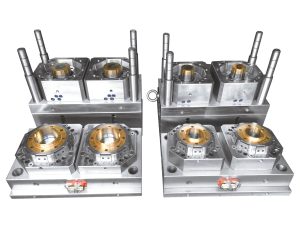
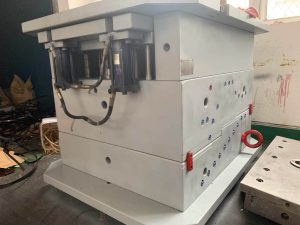
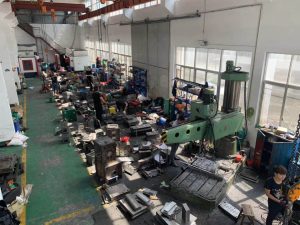

From disposable coffee cups to IML-labelled yoghurt containers, thin wall injection moulding is the backbone of modern food packaging. It enables high-volume production of lightweight plastic parts with walls as thin as 0.35 mm, cycle times under 5 seconds, and material savings of up to 40% compared to conventional moulding. Whether you are a packaging buyer sourcing thin wall containers or a manufacturer evaluating thin wall mould technology, this guide covers everything you need to know.
Table of Contents
- What Is Thin Wall Injection Moulding?
- Key Benefits of Thin Wall Moulding
- Best Materials for Thin Wall Applications
- Thin Wall Mould Design Tips
- Equipment Requirements
- IML Thin Wall Moulding
- Thin Wall Mould Cost Factors
- FAQ
What Is Thin Wall Injection Moulding?
Thin wall injection moulding is a specialised injection moulding process where the wall thickness of the moulded part is 1.0 mm or less — and in many high-volume packaging applications, as thin as 0.35–0.6 mm. The term is most commonly applied to food and beverage packaging: thin wall cups, containers, tubs, lids, and trays produced at extremely high cycle rates.
The challenge of thin wall injection moulding is that as wall thickness decreases, the molten plastic must travel further before it freezes. At 0.5 mm wall thickness, the plastic may solidify in the flow channel before the mould is fully filled. To overcome this, thin wall moulding requires higher injection pressure (often 800–1,200 bar), faster injection speed (300–800 mm/s), and precision mould design with optimised gate placement and cooling.
At TW Mold, we manufacture thin wall moulds for cups, food containers, measuring cups, and IML packaging, with cavity counts ranging from 4 to 32 and cycle times as low as 3.5 seconds.
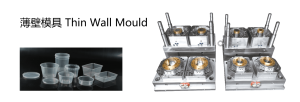
Key Benefits of Thin Wall Moulding
1. Material Savings
Reducing wall thickness from 1.5 mm to 0.5 mm cuts material usage by approximately 60% per part. For a 12-cavity mould producing 500,000 cups per month, this can save 2–4 tons of plastic resin monthly. At current PP prices of USD 1.2–1.5/kg, the annual savings easily exceed USD 30,000.
2. Faster Cycle Times
Thinner walls cool faster. A conventional cup mould might require 8–12 seconds per cycle, while a thin wall mould achieves 3.5–6 seconds. For high-volume packaging, this means 40–60% higher output from the same mould — directly translating to lower per-part cost and faster return on mould investment.
3. Lighter Products
A thin wall cup weighing 3.5g instead of 8g reduces shipping costs, shelf weight, and environmental footprint. Retailers increasingly demand lighter packaging to meet sustainability targets and reduce logistics costs.
4. Better Surface Finish
The high injection pressure and speed used in thin wall moulding produce parts with excellent surface reproduction. Glossy, defect-free surfaces are essential for premium food packaging and IML applications where the label must adhere perfectly.
5. Stackable and Uniform
Precision thin wall moulds produce parts with extremely consistent dimensions, allowing tight stacking without wobble — critical for automated packaging lines where cups are stacked 50–100 high.
Best Materials for Thin Wall Applications
| Material | Typical Use | Min Wall (mm) | Flow Grade |
|---|---|---|---|
| PP | Cups, containers, lids | 0.35–0.5 | High-flow (MFR 40–70) |
| PS | Yoghurt cups, trays | 0.4–0.6 | High-flow (MFR 15–30) |
| PET | Clear cups, salad bowls | 0.5–0.8 | Medium-flow |
| PE | Lids, flexible containers | 0.5–0.7 | Medium-flow |
PP (Polypropylene) is the dominant material for thin wall packaging due to its excellent flow properties, food-contact compliance, toughness, and low cost. High-flow PP grades with Melt Flow Rate (MFR) of 40–70 g/10min are specifically designed for thin wall applications. Brands like Pinnacle, Sinopec, and Reliance offer dedicated thin wall PP grades.
Thin Wall Mould Design Tips
Designing a successful thin wall mould requires attention to five critical factors:
1. Gate Design and Placement
Thin wall parts require generous gate cross-sections to allow rapid fill before freeze-off. Typical gate sizes for thin wall cups are 1.5–3.0 mm wide and 0.6–1.0 mm deep. Gate placement should be at the base of the cup or container, allowing the melt to flow upward and fill uniformly. Edge gating or sub-gating is rarely used in thin wall moulding.
2. Runner System
Almost all thin wall moulds use hot runner systems with valve gates. This eliminates runner waste (critical when margins are thin) and provides precise control over injection timing for each cavity. A balanced manifold ensures all cavities fill simultaneously, preventing short shots in some cavities and flash in others. Runner balancing is verified through mould flow simulation before machining begins.
3. Cooling Channel Design
Fast cycle times demand aggressive cooling. Thin wall moulds typically use conformal cooling channels — channels that follow the contour of the cavity — to extract heat rapidly. Beryllium copper inserts are often used at the core to boost thermal conductivity. The cooling system should be designed so that the cycle time is limited by the thickest section of the part, not by the cooling rate.
4. Venting
High injection speeds trap air in the cavity, causing burn marks and short shots. Thin wall moulds need precision venting — typically 0.01–0.02 mm deep vent slots at the parting line and at flow ends. Vacuum venting systems are used for the most demanding applications.
5. Mould Steel Selection
Thin wall moulds require high-hardness steel to withstand the high injection pressures without deformation. Common choices:
- S136 / 1.2083 — stainless steel, excellent polish, corrosion-resistant, ideal for food packaging
- H13 / 1.2344 — hot work steel, high toughness, used for cores and cavities
- 718H / 1.2738HHB — pre-hardened, good balance of cost and performance
For more on steel selection, see our injection mould cost guide which covers steel grades in detail.
Equipment Requirements
Thin wall moulding demands specialised injection moulding machines with:
- High injection speed — 300–800 mm/s plunger speed, typically requiring accumulator-assisted injection
- High injection pressure — up to 1,200–1,800 bar
- Fast clamp open/close — cycle times under 6 seconds require sub-1-second clamp movement
- Robot interface — IML thin wall production requires synchronous robot integration for label placement and part removal
- Precision control — closed-loop pressure and position control for shot-to-shot consistency
Machines from Engel, KraussMaffei, Haitian, and Borche are commonly used. The mould and machine must be matched as a system — a high-quality thin wall mould cannot perform on a slow or underpowered machine.
IML Thin Wall Moulding
In-Mould Labelling (IML) is the dominant decoration method for thin wall packaging. A printed label is placed inside the mould cavity before injection. The molten plastic fuses with the label during filling, creating a durable, scratch-resistant decoration with no secondary labelling step.
IML thin wall moulding requires:
- Robot integration — to place labels in cavities and remove finished parts within the cooling time
- Label static charge — labels are held in the cavity by electrostatic charge, requiring a static generator
- Vacuum or pin system — alternative to static for holding labels in place
- Extra cycle time — typically adds 0.5–1.5 seconds to the cycle for label placement and removal
At TW Mold, we build IML-compatible thin wall moulds for cups, tubs, and containers, integrated with robots from manufacturers like Siasun and Yushin.
Thin Wall Mould Cost Factors
Thin wall moulds are more expensive than conventional moulds of the same cavity count due to:
- Higher-grade steel — S136 or H13 instead of P20, adding 20–40% to material cost
- Hot runner system — standard for thin wall, adds USD 3,000–12,000 depending on cavity count
- Precision machining — tighter tolerances (±0.01 mm) require more CNC time and EDM finishing
- Conformal cooling — 3D-printed cooling inserts or complex drilling add USD 1,500–5,000
- Robot and IML integration — if IML is required, the mould needs label-handling features, adding 10–20% to cost
Typical thin wall mould price ranges:
| Cavity Count | Product Type | Estimated Price Range |
|---|---|---|
| 2–4 cavities | Thin wall cup / container | USD 8,000–18,000 |
| 6–8 cavities | Thin wall cup + IML | USD 15,000–35,000 |
| 12–16 cavities | Thin wall cup + IML | USD 28,000–60,000 |
| 24–32 cavities | Thin wall lid / container | USD 45,000–90,000+ |
While thin wall moulds cost more than conventional moulds, the total cost of ownership is often lower because of material savings, faster cycle times, and higher output. A detailed cost analysis should factor in expected production volume, material price, and machine hour rate.
Frequently Asked Questions
What wall thickness qualifies as “thin wall” in injection moulding?
Generally, a wall thickness of 1.0 mm or less is considered thin wall injection moulding. In food packaging applications, thin wall parts commonly range from 0.35 mm to 0.8 mm. Walls below 0.35 mm are extremely challenging and require specialised high-flow resins and ultra-high-speed injection equipment.
What is the fastest cycle time for a thin wall mould?
With a well-designed thin wall mould on a high-speed injection machine, cycle times as low as 3.0 to 3.5 seconds are achievable for simple thin wall cups. The actual cycle time depends on part size, wall thickness, cavity count, cooling efficiency, and whether IML (in-mould labelling) is integrated. Typical production cycle times range from 4 to 6 seconds for 8-cavity thin wall cup moulds.
Is a hot runner necessary for thin wall moulding?
Yes, in nearly all commercial thin wall moulds, a hot runner system with valve gates is standard. Hot runners eliminate runner waste (important when margins are thin), provide balanced fill across all cavities, and allow precise injection timing. Cold runner systems are only used for very low-volume thin wall prototypes where waste and cycle time are not critical.
Can thin wall moulds be used for food-grade packaging?
Absolutely. Thin wall injection moulding is the primary manufacturing method for food-grade plastic packaging worldwide. PP (polypropylene) and PS (polystyrene) are the most common food-contact-compliant materials. Moulds are built with stainless steel (S136) and polished surfaces to meet FDA and EU food contact standards. IML labels are also food-safe and fully recyclable.
How much does a thin wall injection mould cost?
Thin wall mould prices range from USD 8,000 for a simple 2-cavity cup mould to USD 90,000+ for a 32-cavity IML container mould. The main cost drivers are cavity count, hot runner system, steel grade (S136 or H13), and IML robot integration. At TW Mold, we provide free quotes based on your part design and production volume. Contact us for a detailed estimate.
Conclusion
Thin wall injection moulding is a high-performance manufacturing process that delivers lighter parts, faster cycles, and significant material savings — but it demands precision in mould design, steel selection, runner configuration, and machine capability. If you are sourcing thin wall moulds for cups, containers, or food packaging, the mould maker’s experience with high-flow materials, conformal cooling, and IML integration is what separates a mould that runs at 3.5 seconds from one that struggles at 8 seconds.
At TW Mold in Huangyan, China, we specialise in thin wall moulds for the global packaging industry. We offer Moldex3D flow analysis, hot runner integration, IML robot setup, and on-site trial moulding as part of every project. Send us your product requirements — we will design a mould that runs fast, lasts long, and saves you material on every cycle.